
Blog
Discover insights, tutorials, and updates from ProductWatch.
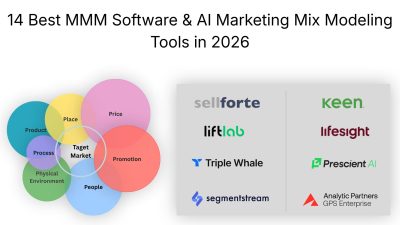
14 Best MMM Software & AI Marketing Mix Modeling Tools in 2026
Marketing teams can see how much they spend on Google, Meta, TikTok, YouTube, TV, CTV, influencers, and other channels. The harder question is which channels actually caused the additional revenue. Last-click attribution often gives too much credit to the final interaction. Marketing Mix Modeling (MMM) takes a broader view by analyzing historical marketing spend alongside sales, seasonality, promotions, pricing, geography, and other business factors. Modern MMM platforms can then estimate incremental impact, calculate ROI, model diminishing returns, and test how a different budget allocation could affect future results. That makes MMM particularly useful for companies running several marketing channels at once. Instead of asking whether Google Ads reported a 5x ROAS, a marketing team can ask a more useful question: "What happens to revenue if another $100,000 is moved from Google to Meta, CTV, or another channel?" The tools in this list take different approaches. Some are complete commercial platforms with data integration, experimentation, forecasting, and budget optimization. Others, such as Google Meridian and Meta Robyn, are open-source frameworks that give data science teams much more control but require technical resources to implement. This guide compares 14 AI and modern Marketing Mix Modeling tools for marketers, growth teams, ecommerce brands, analysts, and data science teams. > QUICK SUMMARY > > * Lifesight: Combines causal MMM, incrementality testing, geo testing, forecasting, scenario planning, and AI-powered optimization across online and offline marketing. > * Mutinex GrowthOS: An enterprise MMM platform that combines automated data ingestion, continuous modeling, scenario planning, and AI assistance through its MAITE analyst. > * Paramark: Combines continuous MMM with incrementality testing and scenario planning, with published plans starting at $100,000/year. > * Recast: A Bayesian MMM platform designed for data science teams that need transparent models, uncertainty analysis, and channel-level marketing measurement. Pricing is custom. > * Analytic Partners GPS Enterprise: An enterprise commercial analytics platform that combines marketing mix modeling with broader business-driver analysis, forecasting, scenario planning, and optimization. > > Prescient AI,Keen Decision Systems, Sellforte, Measured, SegmentStream, and Meta Robyn cover the rest of the market, ranging from omnichannel MMM and ecommerce optimization to enterprise experimentation, automated budget allocation, and open-source modeling. AI MARKETING MIX MODELING TOOLS COMPARISON | Tool | Features that matter | Minimum price | Best for | Free/Paid | | | | : | | | | Lifesight | Causal MMM, geo-lift testing, incrementality, forecasting, scenario planning, AI optimization, online + offline measurement | Custom annual subscription | Scaling brands and enterprises | Paid | | Analytic Partners GPS Enterprise | Commercial analytics, MMM, holistic business-driver modeling, forecasting, scenario planning, optimization, pricing, promotions, competition, macro factors | Custom quote | Large enterprises and complex marketing organizations | Paid | | LiftLab | Agile MMM, response curves, diminishing returns, incrementality calibration, scenario planning, next-best-dollar optimization | Custom quote | Growth leaders, DTC, retail, and CPG brands | Paid | | Keen Decision Systems | AI-driven MMM, incremental revenue measurement, what-if scenarios, forecasting, budget optimization | Custom quote | Enterprise and multi-channel marketing teams | Paid | | Sellforte | Causal MMM, incrementality testing, campaign/ad-set measurement, geo experiments, media planning, AI optimization | From $2,990/month | Ecommerce, DTC, and retail brands | Paid | | Recast | Bayesian MMM, GeoLift, incrementality testing, forecasting, scenario planning, budget optimization, response curves | Custom for MMM | DTC, retail, CPG, and enterprise teams | Paid | | Mutinex GrowthOS | Continuous MMM, automated data ingestion, campaign-varying analysis, scenario planning, forecasting, AI analysis | Custom quote | Enterprise marketing teams | Paid | | SegmentStream | Cross-channel measurement, marginal ROAS, incrementality testing, scenario planning, AI/MCP workflows, automated budget allocation | From $800/month | Digital-first marketing teams | Paid | | Triple Whale | MMM, incrementality testing, attribution, weekly modeling, budget recommendations, scenario planning, online + offline channels | Custom for MMM | Ecommerce, DTC, and omnichannel brands | Paid | | Measured | Causal MMM, incrementality testing, predictive ROI, media planning, diminishing-return curves, scenario modeling | Custom quote | Enterprise brands | Paid | | Prescient AI | Incremental revenue measurement, halo effects, MMM ROAS, channel analysis, forecasting, budget optimization | Custom pricing | Omnichannel and DTC brands | Paid | | Paramark | Bayesian MMM, incrementality testing, 60+ models, scenario planning, forecasting, weekly model refreshes | Custom pricing | Growth and enterprise marketing teams | Paid | | Google Meridian | Bayesian MMM, ROI analysis, response curves, budget optimization, geo-level modeling, open source | $0 software cost| In-house data science teams | Free | | Meta Robyn | Ridge regression, hyperparameter optimization, adstock, saturation curves, budget allocation, open source | $0 software cost | R/Python data science teams | Free | 1. LIFESIGHT Lifesight is a marketing measurement platform that combines Marketing Mix Modeling with incrementality testing, causal attribution, forecasting, and optimization. It is designed for businesses that need to understand which marketing investments are actually contributing to incremental growth across multiple channels. Its MMM methodology analyzes marketing investments alongside factors such as seasonality, pricing, promotions, distribution, competition, and macroeconomic changes. This gives marketing teams a broader view of performance than last-click or platform attribution and can help identify the actual contribution of different channels. One practical feature is scenario-based media planning. Teams can model different budget allocations and estimate how changes in spending could affect business outcomes before committing the budget. Depending on the plan, Lifesight also provides causal MMM, geo-test calibration, advanced geo and time testing, forecasting, and AI-powered campaign optimization. The platform supports online and offline marketing data, making it useful for brands investing in digital advertising alongside CTV, OOH, influencers, retail, and traditional media. This can help businesses bring fragmented marketing data into a single measurement framework. Best for: Scaling brands and enterprises that need causal MMM, incrementality testing, forecasting, and budget planning across online and offline channels. Price: Custom annual subscription. 2. MUTINEX GROWTHOS Mutinex GrowthOS is a continuous Marketing Mix Modeling and growth intelligence platform designed to make marketing measurement part of an ongoing planning workflow rather than a one-time analysis. The platform combines DataOS for data ingestion and cleaning with GrowthOS for MMM and growth intelligence. It also includes MAITE, an AI consultant designed to work with the company's model and business data, allowing teams to explore marketing performance and potential decisions using AI-assisted analysis. GrowthOS provides scenario planning that lets marketers test potential changes to their budgets before implementing them. Its campaign-varying MMM can also analyze factors such as creative, format, publisher, geography, and audience segment, giving teams more detailed insight into what may be driving performance. Mutinex has also introduced an on-demand workflow designed to automate parts of the MMM onboarding process. The company says the workflow can take raw marketing and business data through agentic onboarding and produce production-ready modeling in under 24 hours. Best for: Enterprise marketing teams that want continuous MMM, automated data processing, scenario planning, and AI-assisted marketing analysis. Price: Custom quote. 3. SEGMENTSTREAM SegmentStream combines marketing measurement with marginal ROAS analysis, incrementality testing, scenario planning, and automated budget allocation. Its focus is on turning measurement results into decisions that can influence how marketing budgets are distributed. Its marginal ROAS capability looks beyond the average return of a channel and estimates the potential return from additional spending. This can help marketers identify channels that still have room to scale and channels where additional investment may be producing diminishing returns. SegmentStream also provides geo-lift experimentation and AI workflows through MCP. This allows marketing measurement data to be connected with AI clients and workflows, making it possible for teams to interact with their measurement infrastructure through newer AI-based workflows. The platform can also connect measurement insights with budget allocation. For teams managing multiple advertising platforms, this can reduce the gap between analyzing performance and acting on the results. Best for: Digital-first marketing teams that want marginal ROAS, incrementality testing, scenario planning, AI workflows, and automated budget allocation. Price: From $800/month. | Plan | Starting price | | | : | | Online | $800/month | | Full Funnel | $1,200/month | | Enterprise | $5,000/month | Plans are priced per project rather than per user. 4. LIFTLAB LiftLab is a marketing measurement and optimization platform that combines Agile Marketing Mix Modeling with incrementality testing. Its focus is not simply reporting which channels generated revenue, but helping marketing teams determine where additional investment is likely to create incremental growth. LiftLab's Agile MMM is designed to separate advertising marketplace dynamics from consumer response. This can help teams understand how factors such as media costs, advertising pressure, and consumer behavior influence marketing efficiency instead of treating every change in performance as a direct result of increased or decreased spend. The platform provides response curves and diminishing-return analysis that can help marketers see how channel performance changes as budgets increase. These insights can be used to identify opportunities for reallocating spend and determine where the next marketing dollar may have the greatest potential impact. LiftLab also connects MMM with incrementality testing, giving teams a way to validate model conclusions with real-world experiments. This combination is useful for businesses that want to move from measurement toward continuous budget optimization. Best for: Growth-focused DTC, retail, CPG, and enterprise teams that want automated MMM, incrementality testing, response curves, and next-best-dollar budget decisions. Price: Custom quote. 5. KEEN DECISION SYSTEMS Keen Decision Systems is a marketing measurement and planning platform that uses AI-driven Marketing Mix Modeling to help businesses connect marketing measurement with future investment decisions. Its models can analyze marketing activity across channels and estimate incremental revenue and other business outcomes. Rather than relying only on historical performance reports, Keen focuses on using those measurements to understand how future marketing investments could affect business results. A key capability is what-if scenario planning. Marketing teams can change spending levels across channels and evaluate potential outcomes before implementing a new media plan. This can make it easier to compare competing budget strategies and understand the potential trade-offs involved in moving spend between channels. Keen is particularly useful for organizations managing large, complex marketing budgets where decisions need to account for multiple channels, markets, and business objectives. Its platform is designed to turn MMM outputs into planning decisions rather than leaving analysts with a static measurement report. Best for: Enterprise marketing teams that want AI-driven MMM, scenario planning, forecasting, and budget optimization. Price: Custom quote. 6. SELLFORTE Sellforte combines causal Marketing Mix Modeling with incrementality testing and marketing optimization. It is particularly focused on helping ecommerce, DTC, and retail companies connect marketing measurement with practical media and budget decisions. The platform can measure marketing performance at different levels, including channels, campaigns, and ad sets. This gives teams more detail than a traditional high-level MMM report and can help identify which parts of a media strategy are contributing to incremental sales. Sellforte also provides scenario planning, media planning, AI-powered optimization, and integrations with digital and offline sales data. Depending on the plan, businesses can work with marketplace sales, offline sales, external variables, multiple time series, and custom media taxonomies. This makes Sellforte useful when a marketing team wants to answer practical questions such as which campaigns should receive more budget, where diminishing returns are appearing, and how a proposed media plan could affect future sales. Best for: Ecommerce, DTC, and retail brands that want causal MMM connected to campaign-level measurement and budget optimization. Price: From $2,990/month + customizations. | Plan | Starting price | | | : | | Growth | $2,990/month + customizations | | Advanced | $3,990/month | | Enterprise | $4,990/month | Sellforte's published pricing is based on a stated average monthly media spend of €800,000, so actual pricing can vary. 7. RECAST Recast is a marketing planning and analysis platform built around Bayesian Marketing Mix Modeling. It is designed to help businesses understand how marketing channels contribute to revenue while accounting for uncertainty, changing market conditions, and the delayed effects of advertising. One of Recast's useful capabilities is time-varying ROI analysis. The platform can show how channel efficiency changes over time, helping teams identify the effects of seasonality, creative fatigue, competition, and other changes in the market. Response curves and time-shift analysis can also help marketers understand diminishing returns and delayed marketing effects. Recast connects MMM with incrementality testing through GeoLift. Teams can run geographic experiments and use the results to validate or calibrate their MMM. This can help answer practical questions such as whether increasing spending on a channel actually produces incremental sales or whether a channel is mainly capturing demand generated elsewhere. The platform also supports forecasting, scenario planning, and budget optimization. Businesses can model different channel budgets and constraints to estimate potential future outcomes, while hierarchical modeling can help organizations bring together data from DTC, Amazon, retail, and product-level sources. Best for: DTC, retail, CPG, and enterprise teams that need Bayesian MMM, incrementality testing, forecasting, and budget planning across online and offline channels. Price: Custom pricing for MMM. Recast's standalone GeoLift product is available free for six months, then starts at $100/month. 8. ANALYTIC PARTNERS GPS ENTERPRISE Analytic Partners GPS Enterprise is an enterprise marketing analytics platform built to help businesses understand how marketing and other business factors influence revenue and profit. Its approach goes beyond measuring individual advertising channels by connecting marketing activity with factors such as pricing, promotions, competition, distribution, and broader market conditions. The platform uses Marketing Mix Modeling to measure the contribution of different marketing investments and identify where marketing is creating incremental business results. This can help teams move away from platform-reported ROAS and understand the wider impact of their marketing across channels and markets. One of its useful capabilities is scenario planning and optimization. Marketing teams can test different investment plans and see how changing budgets across channels could affect business outcomes. This makes the platform useful for planning future campaigns rather than only analyzing what happened in the past. GPS Enterprise is particularly suited to large organizations with complex marketing mixes, multiple markets, and significant offline and online investments. Its broader business modeling can also help teams account for non-marketing factors that may affect sales, which is important when marketing performance cannot be separated cleanly from pricing, promotions, seasonality, or competitive activity. Best for: Large enterprises that need MMM, business-driver analysis, forecasting, scenario planning, and marketing optimization across complex markets. Price: Custom quote. 9. TRIPLE WHALE Triple Whale is an ecommerce analytics platform that combines attribution, Marketing Mix Modeling, incrementality measurement, and broader business analytics. Its MMM offering is particularly relevant for ecommerce and DTC brands that want to understand marketing performance across both digital and offline activity. Triple Whale's MMM can analyze historical revenue and marketing spend while incorporating factors such as promotions, seasonality, influencers, offline marketing, and other business variables. This gives ecommerce teams a broader view than relying exclusively on platform attribution from Meta, Google, TikTok, or other advertising networks. The platform is designed to make MMM more accessible to ecommerce teams that may not have a dedicated data science department. Teams can use the model to understand channel contribution, identify changing returns, and evaluate how different marketing investments may affect future revenue. Triple Whale also combines MMM with its broader measurement stack. This can be useful for brands that want attribution, experimentation, and MMM in the same ecommerce analytics environment rather than maintaining separate systems for each measurement method. Best for: Ecommerce, DTC, and omnichannel brands that want MMM alongside attribution and incrementality measurement. Price: Custom pricing for MMM. Triple Whale's public platform plans do not represent the price of its Enterprise MMM offering. 10. MEASURED Measured combines Marketing Mix Modeling with incrementality testing and focuses on causal measurement. It is designed for organizations that want to understand whether marketing activity is actually generating incremental business results rather than simply correlating with conversions. Its approach combines experimentation with MMM. Incrementality tests provide evidence about the causal impact of marketing activities, while MMM provides a broader view across channels and longer time periods. This can give marketing teams multiple sources of evidence when evaluating channel performance. Measured provides predictive ROI, diminishing-return curves, what-if budget planning, and cross-channel measurement. These capabilities can help teams investigate how much additional investment a channel can absorb and what may happen when budgets are shifted between channels. The platform is particularly relevant to enterprise brands where marketing budgets are distributed across many channels and a single attribution model cannot adequately explain the full customer journey. Best for: Enterprise brands that want causal MMM, incrementality testing, predictive ROI, and budget planning. Price: Custom enterprise quote. 11. PRESCIENT AI Prescient AI focuses on measuring incremental marketing impact for omnichannel and DTC brands. Its platform is designed to account for the fact that customers can interact with several marketing channels before completing a purchase. A notable feature is halo-effect measurement. Marketing activity in one channel can influence sales through another channel, and Prescient's models attempt to measure these relationships. The platform provides metrics such as incremental revenue, MMM-paid revenue, MMM-paid ROAS, new customers, CAC, channel revenue, and halo revenue. Prescient also provides forecasting and budget optimization. Teams can create different budget scenarios and estimate how those changes could affect revenue, helping marketers compare potential allocation strategies before changing their media plans. This makes the platform particularly useful for omnichannel brands where digital advertising, retail, offline activity, and other channels interact. Prescient reports that its models have analyzed more than $100 billion in revenue and $7.2 billion in advertising spend across 100+ omnichannel brands. These figures are vendor-reported and should not be treated as independent performance guarantees. Best for: Omnichannel and DTC brands that need incremental revenue measurement, halo-effect analysis, forecasting, and budget optimization. Price: Custom pricing. 12. PARAMARK Paramark combines Marketing Mix Modeling with incrementality testing and scenario planning. Its platform is designed for companies that want a more continuous view of marketing performance and the ability to connect measurement with future budget decisions. Paramark uses Bayesian modeling and evaluates multiple models to identify an approach that fits the available business data. The platform provides frequent model refreshes and reporting, allowing marketing teams to monitor how channel performance changes rather than relying on a single annual MMM study. Its models can include paid, owned, and earned channels while accounting for factors such as seasonality, macroeconomic trends, advertising carryover, and diminishing returns. Paramark also connects MMM with incrementality experiments, which can provide additional evidence for validating model results. The platform's scenario planning capabilities allow teams to explore potential budget allocations and estimate how different investment strategies could affect business outcomes. This can be useful when marketing leaders need to compare budget scenarios before finalizing a media plan. Best for: Growth and enterprise marketing teams that want Bayesian MMM, incrementality testing, forecasting, and scenario planning. Price: From $100,000/year. | Plan | Price | | | : | | Essentials | $100,000/year | | Advanced | $150,000/year | | Enterprise | $220,000/year | 13. GOOGLE MERIDIAN Google Meridian is an open-source Marketing Mix Modeling framework from Google. Unlike the commercial platforms above, Meridian provides the modeling framework rather than a complete managed SaaS service. Meridian uses Bayesian modeling to estimate marketing ROI, channel contribution, response curves, and budget allocation. Google provides tools and documentation for data preparation, model building, evaluation, calibration, and optimization. The biggest advantage is control. Data science teams can inspect the framework, customize their implementation, work with their own data, and build their own reporting and optimization layers. This can make Meridian attractive to companies that already have analytics and engineering resources. The trade-off is that the company is responsible for the surrounding infrastructure and workflow. Teams need to manage data preparation, implementation, model monitoring, interpretation, reporting, and maintenance themselves. Best for: Companies with data scientists, analysts, and engineers that want a customizable Bayesian MMM framework. Price: Free, open source. Internal engineering and data science costs apply. 14. META ROBYN Meta Robyn is an open-source Marketing Mix Modeling framework developed by Meta Marketing Science. It gives data science teams a foundation for building their own MMM workflow rather than providing a managed marketing analytics platform. Robyn uses techniques such as ridge regression, evolutionary algorithms for hyperparameter optimization, time-series decomposition, adstock modeling, saturation curves, and gradient-based budget allocation. These methods allow teams to model advertising effects and investigate how marketing returns change as spending levels increase. The framework is useful for organizations that want direct control over the modeling process. Teams can customize the implementation, inspect the underlying methodology, and build their own reporting or optimization systems around Robyn. However, Robyn requires technical expertise. Data preparation, infrastructure, model execution, interpretation, monitoring, and reporting remain the responsibility of the internal team. For businesses without data science resources, a managed MMM platform may be easier to deploy and maintain. Best for: Data science and analytics teams that want a free, open-source MMM framework and have R/Python expertise. Price: Free, MIT-licensed open source. Internal development and maintenance costs apply. HOW TO CHOOSE THE RIGHT AI MARKETING MIX MODELING TOOL Choosing an MMM tool starts with the business decision you need to make, not the number of features a platform offers. For teams that want automation, forecasting, scenario planning, and optimization without building everything internally, platforms such as Analytic Partners GPS Enterprise, Lifesight, LiftLab, Keen Decision Systems, Sellforte, Recast, Mutinex GrowthOS, and SegmentStream offer managed solutions. Ecommerce and DTC brands should also consider how easily a tool can connect advertising, ecommerce, retail, offline, and promotional data. Sellforte, Recast, and Triple Whale are particularly relevant for these use cases. Next, consider how the results will be used. If the goal is simply understanding channel contribution, basic MMM may be enough. If the team needs to decide where the next marketing dollar should go, look for response curves, marginal ROAS, diminishing-return analysis, scenario planning, forecasting, and budget optimization. Incrementality testing is also important because historical models alone cannot always prove causation. Tools such as Lifesight, LiftLab, Sellforte, Recast, Measured, and Paramark combine MMM with experimentation or incrementality analysis to provide additional evidence for budget decisions. Finally, companies with strong data science teams can consider Google Meridian or Meta Robyn. Both are free and open source, but businesses still need internal resources for data preparation, implementation, modeling, and maintenance. CONCLUSION The best MMM tool is not necessarily the one with the most AI features. It is the one that helps the business make better marketing budget decisions. The right platform should help answer questions such as: Which channels generate incremental revenue? Where are returns declining? What happens if the budget changes? And where should the next marketing dollar go? For enterprise teams, Analytic Partners, Lifesight, LiftLab, and Keen Decision Systems are strong options to explore. For ecommerce and DTC brands, Sellforte, Recast, and Triple Whale offer relevant measurement and optimization capabilities. For teams that prefer to build internally, Google Meridian and Meta Robyn provide free open-source foundations. Ultimately, modern MMM is moving beyond reporting past performance. Its real value is helping marketing teams decide what to do with the next dollar of budget.

Best 50 Product Hunt Alternatives in 2026
Launching a startup in 2026 looks very different from what it did just a few years ago. Back then, a single Product Hunt launch could create enough momentum to kickstart growth. Founders would spend weeks preparing for one launch day, hit the homepage, and suddenly see a flood of signups, investor attention, social shares, and press mentions. That still happens occasionally. But today, the launch ecosystem is far more competitive, fragmented, and fast-moving. Thousands of AI tools, SaaS products, developer platforms, and creator apps launch every month. Attention spans are shorter, timelines move faster, and even successful launches often fade quickly without a broader distribution strategy behind them. Modern startup growth is no longer about launching once. It is about launching repeatedly, across multiple platforms, communities, directories, and ecosystems where your potential users already spend time. That includes: * launch communities * SaaS directories * review platforms * AI tool aggregators * startup databases * founder communities * and alternative-search websites More importantly, these platforms create a cascading visibility effect that many founders underestimate. A strong directory listing or launch post does not just generate direct traffic. It often gets picked up by newsletters, startup roundups, AI tool collections, social media threads, founder communities, and blog posts. Those mentions create additional backlinks, citations, referral traffic, brand searches, and SEO authority over time. One launch can turn into dozens of mentions across the web. That is why smart founders in 2026 are focusing heavily on distribution and backlink ecosystems alongside product development. The startups that keep growing are usually the ones consistently showing up everywhere, not just on one launch platform for 24 hours. This guide covers 50 of the best Product Hunt alternatives worth using in 2026, including launch communities, review sites, directories, and startup discovery platforms that can help generate long-term visibility, backlinks, SEO growth, and recurring user discovery long after launch day ends. LIST OF BEST PRODUCT HUNT ALTERNATIVES | # | Platform | Category | Pricing | Best For | | | | | | | | 1 | Product Watch | Launch & Discovery | Free | Daily product discovery among tech enthusiasts | | 2 | SaaSHub | SaaS Directory | Free | SaaS discovery and alternative-search traffic | | 3 | Alternative.me | SaaS Directory | Free | Capturing buyers searching for alternatives | | 4 | BetaList | Launch & Discovery | Free / $129 | Pre-launch beta sign-ups and early adopters | | 5 | Launching Next | Launch & Discovery | Free | Community-driven daily startup discovery | | 6 | G2 | Software Review | Free / Paid | B2B SaaS buyers across SMB and enterprise | | 7 | SoftwareWorld | SaaS Directory | Free | Software category listing and SEO visibility | | 8 | Crunchbase | Investor / Intelligence | Free / $29/mo | Investor visibility and startup credibility | | 9 | WebCatalog | SaaS Directory | Free | Web app discovery and desktop app wrapping | | 10 | Uneed.best | Launch & Discovery | Free / $30 | Daily launch competitions with SEO backlinks | | 11 | Capterra | Software Review | Free / PPC | Top-of-funnel SMB software discovery | | 12 | TrustRadius | Software Review | Free / $30k | Enterprise procurement and long-form reviews | | 13 | PeerSpot | Software Review | Free | Enterprise IT, cybersecurity and DevOps products | | 14 | Pitchwall | Launch & Discovery | Free / $99 | Pre-launch validation and equal-visibility exposure | | 15 | TinyLaunch | Niche / Indie | Free | Indie makers launching focused micro-products | | 16 | Trustpilot | Software Review | Free / Paid | Consumer-facing SaaS and brand trust signals | | 17 | AppSumo | Deal Marketplace | Revenue share | Rapid user acquisition via lifetime deals | | 18 | Tiny Startups | Niche / Indie | Free | Bootstrapped and micro-SaaS founders | | 19 | Starthub.zip | Launch & Discovery | Free | Startup discovery among tech-forward founders | | 20 | Toolfolio | SaaS Directory | Free | Curated tool discovery for makers and creators | | 21 | EarlyHunt | Launch & Discovery | Free | First community of users for early-stage products | | 22 | Slocco | Niche / Indie | Free | Community-driven product sharing and feedback | | 23 | Toolfame | SaaS Directory | Free | Tool promotion among productivity communities | | 24 | Aura++ | SaaS Directory | Free / Paid | Automated online presence and backlink building | | 25 | Do Follow Tools | SaaS Directory | Free | SEO-focused do-follow backlink acquisition | | 26 | Dang | SaaS Directory | Free | AI tools and modern software discovery | | 27 | Peerlist | Launch & Discovery | Free | Professional weekly product launches with backlinks | | 28 | Startup Buffer | Launch & Discovery | Free / Paid | Early-stage startup promotion and newsletter reach | | 29 | Startup Lister | SaaS Directory | Free / Paid | Multi-directory submission for founders | | 30 | ctrlalt.cc | SaaS Directory | Free | Software alternatives community discovery | | 31 | StartupRanking | Investor / Intelligence | Free | Global startup visibility and community ranking | | 32 | IndieHunt | Niche / Indie | Free | AI-focused indie maker weekly launches | | 33 | StartupBase | Launch & Discovery | Free | Community platform for makers and early adopters | | 34 | TechnologyAdvice | Software Review | Free / Paid | B2B software leads via content and comparison | | 35 | SaaSGenius | SaaS Directory | Free | SaaS-specific discovery and product comparison | | 36 | AlternativeTo | SaaS Directory | Free | Long-term organic traffic from alternative searches | | 37 | StackShare | SaaS Directory | Free | Developer tools and technical SaaS discovery | | 38 | SaaSworthy | SaaS Directory | Free | SaaS products across all B2B categories | | 39 | WebAppRater | SaaS Directory | Free | Web application reviews and community evaluation | | 40 | Software Findr | SaaS Directory | Free | Bottom-of-funnel intent-driven software discovery | | 41 | ScoutForge | Investor / Intelligence | Free | Product discovery and angel investor visibility | | 42 | Twelve.tools | SaaS Directory | Free | Curated editorial tool discovery | | 43 | Next Gen Tools | SaaS Directory | Free | Emerging tech and AI-powered tool discovery | | 44 | KEN Moo | Deal Marketplace | Free | SaaS deal discovery and lifetime deal community | | 45 | Faizer |Niche / Indie| Free | Founder community product sharing and feedback | | 46 | SideProjectors | Niche / Indie | Free | Side projects with buy/sell marketplace option | | 47 | LaunchIgniter | Launch & Discovery | Free | Startup launch exposure and ongoing discovery | | 48 | Microlaunch | Niche / Indie | Free | Micro-SaaS with month-long product visibility | | 49 | TopDevelopers | SaaS Directory | Free / Paid | SaaS tools for development-adjacent audiences | | 50 | StartupBlink | Investor / Intelligence | Free / Paid | Global ecosystem map and investor discovery | OVERVIEW OF PRODUCT HUNT Product Hunt is still the most recognizable startup launch platform on the internet. Founded in 2013, it turned product discovery into a daily ritual for founders, developers, investors, early adopters, and tech enthusiasts looking for the next interesting tool or startup. A successful Product Hunt launch can still generate thousands of visitors, social proof, investor attention, customer feedback, and media visibility in a very short period of time. That influence is exactly why most founders still prioritize Product Hunt during launch week. But Product Hunt also changed significantly over the years. The competition became much more intense. Launches became increasingly dependent on timing, audience size, and existing networks. Products now compete inside an ecosystem where hundreds of startups launch every week, especially across AI and SaaS categories. As a result, many founders are now combining Product Hunt with additional launch and discovery platforms to build more sustainable visibility. That is where Product Watch and the broader ecosystem of startup discovery platforms become incredibly valuable. Instead of depending on a single 24-hour launch cycle, founders can create long-term discoverability through communities, directories, reviews, backlinks, and niche startup audiences across multiple platforms. The goal is no longer just launch-day attention. The goal is lasting distribution. TOP 10 PRODUCT HUNT ALTERNATIVES THAT ACTUALLY MATTER 1. PRODUCT WATCH Website: https://productwatch.io/ Best For: Early product visibility, startup launches, and maker discovery Product Watch deserves the top spot because it still feels discovery-first instead of popularity-first. Unlike overcrowded launch platforms where products with huge audiences dominate instantly, Product Watch gives smaller startups and indie makers a realistic chance to get noticed organically. The platform focuses heavily on showcasing genuinely useful new products to a growing audience of founders, developers, and early adopters. The interface is clean, submissions are straightforward, and products continue receiving visibility after launch day instead of disappearing within 24 hours. For founders launching without a massive Twitter following, Product Watch is one of the most practical Product Hunt alternatives available right now. 2. SAASHUB Website: https://www.saashub.com/ Domain Rating: DR 78 Best For: Long-term SEO traffic and alternative-search discovery SaaSHub quietly becomes more valuable over time. The platform ranks extremely well for searches like: * “best alternatives to X” * “tools similar to Y” * “top SaaS for Z” That means the traffic coming from SaaSHub is often highly targeted and purchase-driven. Users discovering your product here are usually already comparing solutions. For SaaS startups, SaaSHub is one of the best long-term discovery platforms available. 3. BETALIST Website: https://betalist.com/ Domain Rating: DR 75 Best For: Pre-launch startups and beta signups BetaList remains one of the strongest pre-launch communities for startups. Its audience actively looks for early-stage products, private betas, and upcoming launches. That makes it perfect for: * collecting waitlist signups * testing positioning * validating demand * building early momentum Many successful startup launches begin on BetaList before they ever appear on Product Hunt. 4. G2 Website: https://www.g2.com/ Domain Rating: DR 91 Best For: SaaS trust and software reviews G2 is where software buyers go when they are seriously evaluating tools. Once people discover your product, they immediately search for reviews, comparisons, and credibility signals. A strong G2 profile dramatically improves trust, especially for B2B SaaS companies. Even a handful of authentic reviews can improve conversions significantly. 5. ALTERNATIVETO Website: https://alternativeto.net/ Domain Rating: DR 79 Best For: Capturing competitor-switch traffic AlternativeTo is incredibly powerful because users arrive with intent. They are already searching for alternatives to another tool and actively looking for replacements. That makes the traffic highly relevant and conversion-friendly. Once your product gets positioned properly inside competitor alternative pages, the visibility compounds for years. 6. PEERLIST Website: https://peerlist.io/ Domain Rating: DR 76 Best For: Developer launches and technical founder communities Peerlist has become one of the best launch platforms for developers and builders. Its audience includes: * developers * indie hackers * designers * technical founders * startup professionals The weekly launch format also gives products more time to gain traction naturally compared to Product Hunt’s intense 24-hour cycle. 7. UNEED Website: https://www.uneed.best/ Domain Rating: DR 74 Best For: Launch competitions and backlinks Uneed combines launch exposure with strong SEO value. Products compete in daily launch rankings similar to Product Hunt, but competition is far less saturated. The platform also gives valuable backlinks and newsletter exposure. For smaller startups, Uneed often feels much easier to win visibility on. 8. CRUNCHBASE Website: https://www.crunchbase.com/ Domain Rating: DR 91 Best For: Startup legitimacy and investor visibility Crunchbase is less about customer acquisition and more about credibility. Investors, journalists, recruiters, and startup communities constantly use Crunchbase to research companies. A complete Crunchbase profile strengthens your startup’s online legitimacy and improves discoverability across the web. 9. APPSUMO Website: https://appsumo.com/ Domain Rating: DR 83 Best For: Explosive user growth and lifetime deals AppSumo is completely different from traditional launch platforms. Instead of discovery, it focuses on rapid customer acquisition through software deals and lifetime pricing campaigns. A successful AppSumo launch can generate: * thousands of users * immediate revenue * huge awareness * massive product feedback But it works best for products that are already stable and ready to scale. 10. CAPTERRA Website: https://www.capterra.com/ Domain Rating: DR 91 Best For: SMB software discovery Capterra is one of the biggest software review and comparison platforms online. The users browsing Capterra are usually actively evaluating software, which makes the traffic highly commercial and purchase-oriented. For SaaS products targeting SMBs, operations teams, or agencies, Capterra becomes extremely valuable after launch. 40 MORE PRODUCT HUNT ALTERNATIVES 11. LAUNCHING NEXT * Domain Rating: DR 50 * Best For: Daily startup discovery and launch visibility 12. SOFTWAREWORLD * Domain Rating: DR 73 * Best For: SaaS SEO visibility and category discovery 13. WEBCATALOG * Domain Rating: DR 59 * Best For: Web app discovery and desktop app exposure 14. TRUSTRADIUS * Domain Rating: DR 84 * Best For: Enterprise SaaS credibility and reviews 15. PEERSPOT * Domain Rating: DR 73 * Best For: Enterprise IT and cybersecurity products 16. PITCHWALL * Domain Rating: DR 75 * Best For: Pre-launch validation and startup feedback 17. TINYLAUNCH * Domain Rating: DR 72 * Best For: Indie makers and micro SaaS launches 18. TRUSTPILOT * Domain Rating: DR 94 * Best For: Consumer trust and brand reputation 19. TINY STARTUPS * Domain Rating: DR 60 * Best For: Bootstrapped founders and indie projects 20. STARTHUB.ZIP * Domain Rating: DR 26 * Best For: Startup discovery communities 21. TOOLFOLIO * Domain Rating: DR 37 * Best For: Creator and productivity tools 22. EARLYHUNT * Domain Rating: DR 54 * Best For: Early adopters and MVP launches 23. STARTUP RANKING * Domain Rating: DR 61 * Best For: Community-driven founder feedback 24. TOOLFAME * Domain Rating: DR 73 * Best For: Tool promotion and SEO backlinks 25. AURA++ * Domain Rating: DR 70 * Best For: Online presence and backlink building 26. DO FOLLOW TOOLS * Domain Rating: DR 72 * Best For: SEO-focused do-follow backlinks 27. DANG * Domain Rating: DR 81 * Best For: AI tools and emerging SaaS products 28. STARTUP BUFFER * Domain Rating: DR 40 * Best For: Startup exposure and newsletter reach 29. STARTUP LISTER * Domain Rating: DR 31 * Best For: Multi-directory startup submissions 30. CTRLALT.CC * Domain Rating: DR 49 * Best For: Alternative software discovery 31. STARTUPRANKING * Domain Rating: DR 74 * Best For: Global startup visibility 32. INDIEHUNT * Domain Rating: DR 55 * Best For: AI launches and indie products 33. STARTUPBASE * Domain Rating: DR 40 * Best For: Founder communities and startup launches 34. TECHNOLOGYADVICE * Domain Rating: DR 78 * Best For: B2B software buyer leads 35. SAASGENIUS * Domain Rating: DR 57 * Best For: SaaS comparison and discovery 36. ALTERNATIVE.ME * Domain Rating: DR 74 * Best For: Competitor alternative traffic 37. STACKSHARE * Domain Rating: DR 79 * Best For: Developer tools and engineering software 38. SAASWORTHY * Domain Rating: DR 70 * Best For: SaaS product discovery 39. WEBAPPRATER * Domain Rating: DR 34 * Best For: Web application reviews 40. SOFTWARE FINDR * Domain Rating: DR 74 * Best For: Bottom-of-funnel software buyers 41. SCOUTFORGE * Domain Rating: DR 46 * Best For: Startup discovery and investor visibility 42. TWELVE.TOOLS * Domain Rating: DR 80 * Best For: Curated productivity and maker tools 43. NEXT GEN TOOLS * Domain Rating: DR 65 * Best For: AI-powered and emerging tech products 44. KEN MOO * Domain Rating: DR 37 * Best For: SaaS deal discovery and LTD launches 45. FAIZER * Domain Rating: DR 81 * Best For: Founder networking and startup communities 46. SIDEPROJECTORS * Domain Rating: DR 70 * Best For: Side projects and indie SaaS products 47. LAUNCHIGNITER * Domain Rating: DR 75 * Best For: Startup launch exposure 48. MICROLAUNCH * Domain Rating: DR 60 * Best For: Micro SaaS and indie maker launches 49. TOPDEVELOPERS * Domain Rating: DR 74 * Best For: Technical SaaS and developer-focused products 50. STARTUPBLINK * Domain Rating: DR 72 * Best For: Global startup ecosystem visibility CONCLUSION Launching a product in 2026 is no longer about a single launch day or one platform. While Product Hunt remains an important part of the startup ecosystem, the products that continue growing are usually the ones building visibility across multiple channels over time. Launch communities, SaaS directories, review platforms, founder networks, and alternative-search websites all play a role in helping users discover and trust your product. Some platforms help generate early traction. Others improve SEO, build credibility, or create long-term discoverability through search and backlinks. Together, they create a stronger and more sustainable launch strategy than relying on any single source of traffic. You also do not need to submit everywhere at once. The better approach is to start with a few platforms that align with your product, audience, and stage of growth, then expand gradually as your visibility grows. At the end of the day, successful launches are rarely driven by hype alone. They come from consistent distribution, clear positioning, and showing up where your potential users are already searching for solutions.
Free tools for solo founders
Every tool tested across three side projects over 18 months. Here's what actually earned its place in the stack - and a few that sounded good but weren't worth the tab. KEY TAKEAWAYS * A complete startup stack can run for around $1/month before revenue. * Vercel, Supabase, Railway, AWS Activate and Cloudflare cover most infrastructure needs. * Zoho mail, Resend and Brevo solve transactional and marketing emails separately. * Umami and PostHog provide privacy-friendly analytics and product insights. * Notion, Linear, Tally, and Cal.com simplify operations and user management. * AI tools like Antigravity, ChatGPT, Claude, and GitHub Copilot are useful even on free plans. * Some popular tools are no longer worth using due to restrictive free tiers. At $0 MRR you need to be careful what you pay for. But the free tiers across infrastructure, tooling, and SaaS have genuinely improved over the last few years. You can build, ship, and market a real product today without a credit card - at least until you have users who justify the cost. This post covers the stack that held up across three side projects over 18 months - actual usage, not speculation. Two of those projects are still running, and one now pays for its own hosting. INFRASTRUCTURE: HOST, SHIP, ITERATE VERCEL Pricing: Free up to 100GB bandwidth/month The Hobby plan is genuinely good. You get automatic deploys on push, preview URLs per branch, serverless functions, and Edge Config. For a solo founder running a Next.js or SvelteKit app, this handles 90% of prod deployments without configuration. The unexpected upside: how much faster iteration gets when every PR has a preview URL. Share it with a beta user in Slack. They test. They reply. No staging server to manage. Free tier limit: 100GB bandwidth and 6,000 function-hours per month. You'll hit these with real traffic - which is fine, because at that point you should have paying customers. * Works great for: Next.js, SvelteKit, Nuxt, static sites * Watch out for: long-running background jobs (use Railway instead) SUPABASE Pricing: Free for individuals Postgres with a dashboard, row-level security, auth (including OAuth and magic links out of the box), and a storage layer - all free to start. The DX is better than you'd expect from a hosted database. The SQL editor works, the table view is usable, and supabase gen types typescript keeps client types in sync with the schema. Auth alone makes it worth it. Setting up email/password + Google + GitHub OAuth takes about 20 minutes, including the callback routes. That's time previously spent reinventing the same plumbing on every project. Free tier limit: Projects pause after 1 week of inactivity. Fine for dev; pin your prod project to avoid cold starts for real users. * Works great for: apps that need auth + db + storage together * Watch out for: paused projects surprising early users at 2am RAILWAY Pricing: $5 monthly usage credit Where Vercel handles the frontend, Railway handles the stuff that needs to run longer than a serverless function - background queues, cron jobs, a separate Python service for ML inference. Everything deploys from a GitHub repo with environment variables and a Dockerfile or Nixpacks auto-detection. The $5/month free credit covers low-traffic services comfortably. A Node worker + Redis queue processing a few hundred jobs per day can run free for months before hitting the credit ceiling. AWS ACTIVATE Pricing: Free ( program, eligible startups can receive up to $ 100,000 to $ 200,000 in promotional credits to offset cloud infrastructure costs, including compute, storage, and machine learning models like Amazon Bedrock) If you're building something that eventually outgrows free tiers, AWS Activate can significantly extend your runway. Eligible startups can receive cloud credits that offset infrastructure costs across services like EC2, S3, RDS, Lambda, and more. The program is particularly valuable for founders working on AI, data, or infrastructure-heavy products that need more flexibility than typical free plans provide. * Works great for: startups planning to scale on AWS * Best benefit: cloud credits that reduce early infrastructure costs CLOUDFLARE Pricing: DNS + CDN + DDoS protection + Pages hosting: Free Cloudflare offers one of the most generous free tiers for builders. Beyond free DNS, SSL certificates, CDN, and DDoS protection, it also includes Cloudflare Pages for hosting landing pages, blogs, documentation sites, and portfolios at no cost. Cloudflare Workers further extends the platform with up to 100,000 free requests per day, making it useful for lightweight APIs, rate limiting, redirects, and edge applications. For many side projects and early-stage startups, Cloudflare can handle DNS, security, performance optimization, and static hosting from a single platform. * Best for: DNS, CDN, security, static websites, and edge functions * Includes: Cloudflare Pages, SSL certificates, and global CDN * Standout feature: 100,000 free Worker requests per day GITHUB PAGES Pricing: Free static website hosting GitHub Pages is a simple way to publish websites directly from a GitHub repository. It works particularly well for documentation, project websites, open-source projects, and personal portfolios where a lightweight deployment workflow is preferred. * Best for: documentation, project sites, open-source projects * Standout feature: deploy directly from a GitHub repository DESIGN AND PAYMENTS CANVA Pricing: Free graphics, presentations, and video editing Canva has become the default design tool for many founders who aren't professional designers. The free plan covers social media graphics, posters, presentations, YouTube thumbnails, short videos, pitch decks, and marketing assets. For early-stage projects, Canva often replaces multiple tools. A product launch graphic, investor deck, feature announcement, and demo video can all be created from the same workspace. * Works great for: social media posts, launch graphics, pitch decks, short videos * Watch out for: some premium templates and assets require a paid plan FIGMA Pricing: Free - 3 projects Three projects cover a lot of ground for a solo founder. Keep one file per product with everything: screens, component library, and the occasional architecture diagram for your own reference. Dev mode inspection is free now - previously a paid feature - and it's genuinely useful for getting spacing right. If you're technical, don't skip Figma just because you "don't need design tools." Having a single source of truth for what the app looks like - even a rough one - prevents you from redesigning the same modal for times in code. STRIPE **Pricing:**Free to use - 2.9% + 30¢ per transaction No monthly fee. You pay per transaction. For a SaaS doing subscriptions, the Billing and Checkout products handle almost everything: dunning, invoice emails, proration on plan changes, and the tax bits if you turn on Stripe Tax. The Stripe CLI is worth knowing about: stripe listen --forward-to localhost:3000/webhooks This routes webhook events to your local server. Test a subscription upgrade flow in 10 minutes without touching ngrok. EMAIL - TWO DIFFERENT PROBLEMS > Transactional vs. marketing email: these are separate problems and you want separate tools. Mixing them causes deliverability issues for both. A password reset landing in the Promotions tab is a support ticket waiting to happen. ZOHO MAIL Pricing: Free business email Having a professional email address helps establish credibility from day one. Zoho Mail offers a free plan that supports custom domains, allowing emails like [email protected] without paying for Google Workspace. For bootstrapped founders, it is one of the easiest ways to get business email running before revenue starts coming in. * Works great for: business email on custom domains * Watch out for: fewer collaboration features than Google Workspace RESEND Pricing: Free - 3,000 emails/mo, 100/day Transactional email that doesn't require a PhD to set up. Verify your domain, grab the API key, drop in the SDK. The React Email integration is the best part - write templates as React components, preview them in a browser, and render them server-side before sending. No more testing email HTML in Outlook. // send a welcome email in 8 lines import { Resend } from 'resend'; import { WelcomeEmail } from './emails/welcome'; const resend = new Resend(process.env.RESEND_API_KEY); await resend.emails.send({ from: '[email protected]', to: user.email, subject: 'Welcome to ProductWatch', react: <WelcomeEmail name={user.name} />, }); BREVO Pricing: Free - 300 emails/day, unlimited contacts Unlimited contacts on the free plan is the differentiator. Mailchimp caps you at 500 contacts free. If you're collecting a waitlist, Brevo lets you grow without paying until you're actually sending campaigns at volume. The automation builder is serviceable for a 4-email onboarding sequence triggered on signup - nothing fancy, but it works. The interface is a bit dated compared to newer tools, but that doesn't matter much when you're writing copy, not CSS. * Watch out for: the daily send limit on free means batching your launches. Not ideal for a 2,000-person waitlist email. ANALYTICS WITHOUT THE SURVEILLANCE BAGGAGE UMAMI Pricing: Free - self-hostable or free cloud tier Privacy-first analytics that doesn't need a cookie banner. Umami tracks page views, referrers, and custom events without fingerprinting users. The dashboard is clean enough that you'll actually check it instead of just assuming Google Analytics is running somewhere. The cloud free tier gives you 10,000 events per month. Deploy it yourself on Railway and you get unlimited events for ~$1/month in compute: # self-host in 20 minutes git clone https://github.com/umami-software/umami # add DATABASE_URL, APP_SECRET to Railway # deploy - done POSTHOG Pricing: Free - 1M events/mo Where Umami handles traffic, PostHog handles product analytics: funnels, session recordings, feature flags, A/B testing. One million events per month free is enough for early-stage products to get real insight into where users drop off. Feature flags alone justify adding it. You can ship half-rolled-out features to 10% of users in production, measure the activation rate, and toggle the flag off without a deploy. That's normally a paid feature. * Best use: funnel analysis for a signup or activation flow where you need to find the exact drop-off step MANAGING YOURSELF NOTION Pricing: Free - unlimited pages, 10 guests Notion works well for everything that's not code: user research notes, the product roadmap, a CRM with one table, launch checklists, blog drafts. The free plan is generous enough to run an entire early-stage operation inside it. One pattern that holds up: a "weekly review" page as a Notion template. Duplicate it weekly, fill in what shipped, what's stuck, and what the single most important thing is next week. Keeps the project from drifting in the wrong direction for a month without noticing. LINEAR Pricing: Free - unlimited issues, 1 workspace Linear is Jira if Jira were designed for people who have to actually use it. Free for a solo project. Tracking bugs, features, and user-reported issues in Linear - rather than in Notion - helps because keeping a separate space for "things to fix" vs "things to think about" reduces context-switching. The GitHub integration is good: reference an issue in a commit message and it closes automatically on merge. Keeps the issue list clean without extra bookkeeping. CAL.COM Pricing: Free - unlimited issues, 1 workspace Open-source Calendly. Self-hostable, or use the cloud version free. Embed it in the product for user onboarding calls. The shared link is a lot less awkward than emailing back and forth about times, and the free tier doesn't watermark your booking page the way some alternatives do. TALLY Pricing: Free - unlimited forms and submissions Typeform-style forms with unlimited everything free. Good for user research surveys, feature request forms embedded in the app, and feedback collection after onboarding calls. The Notion integration sends responses straight to a database without Zapier in the middle. AI TOOLS WORTH THE FREE TIER ANTIGRAVITY Pricing: Free AI access Many AI tools provide limited daily usage on free plans. AntiGravity stands out by offering a more generous free experience, making it practical for coding assistance, content generation, research, brainstorming, and day-to-day startup work. For founders trying to minimize software spending, a generous AI free tier often delivers more value than access to a specific model. * Best for: coding help, content generation, idea validation, research * Advantage: higher usable free-tier limits for regular workflows Other useful options include ChatGPT and Claude, though their free plans tend to have tighter daily limits depending on usage. GITHUB COPILOT Pricing: Free for individuals GitHub rolled out a free Copilot tier - 2,000 completions per month and 50 chat messages. Enough for coding sessions where you want autocomplete without paying $10/month until the product is actually making money. * Best for: boilerplate, tests, and filling in the obvious 5 lines you were about to type anyway * Skip for: anything security-sensitive - review what it suggests before committing WHAT TO SKIP Not everything with a free tier earns its place in the stack. Some tools tested and removed: | Tool | Tested for | Why it got cut | | | | | | Airtable | User CRM | Free tier caps at 1,000 records. Notion does the same job at any scale for free. | | Heroku | Backend deploys | Killed their free tier in 2022. Railway is better anyway. | | Mailchimp free | Newsletter | 500-contact cap is painfully low. Brevo's unlimited contacts wins immediately. | | Zendesk free | Support tickets | Overkill. Crisp's free chat + a shared inbox in Gmail works fine at <100 users. | | PlanetScale | MySQL alternative to Supabase | Killed their free tier in 2024. Supabase and Neon are better options now. | > Watch out for free tier cliffs. PlanetScale, Heroku, and Render have all reduced or removed free tiers in the last two years. Before building on a free tier, check the pricing page carefully for what happens when the bill arrives. THE WHOLE STACK, PRICED OUT Here's the full stack running on an active side project, and what it actually costs per month before there are paying users: | Tool | What it does | Monthly cost at $0 MRR | | | | | | Vercel (Hobby) | Frontend hosting, deploys | $0 | | Supabase (Free) | DB + auth + storage | $0 | | Railway | Background workers | $0 (under $5 credit) | | Cloudflare | DNS, CDN, Security, Pages, Workers | $0 | | GitHub Pages | Static website hosting | $0 | | AWS Activate | Startup cloud credits | $0 (eligible startups) | | Zoho Mail | Business email | $0 | | Resend | Transactional email | $0 | | Brevo | Marketing email | $0 | | Umami(self-hosted) | Analytics | ~$1 (Railway compute) | | PostHog | Product analytics | $0 | | Canva | Graphics, presentations, videos | $0 | | Figma | Design & UI mockups | $0 | | Antigravity | AI assistant | $0 | | GitHub Copilot (Free) | AI coding assistance | $0 | | Notion + Linear | Planning & project management | $0 | | Stripe | Payments | $0 (pay per transaction) | | Total | | ~$1/mo | The domain name ($12/year from Cloudflare Registrar) is the actual biggest expense before revenue. When a project starts earning, the first paid upgrades usually go in this order: Vercel Pro for faster builds, PostHog Scale for more events, then Resend's paid plan for higher send limits. The infrastructure grows with revenue instead of preceding it. > The goal isn't the cheapest stack. It's delaying cash outflow until there's cash in. These tools make that possible without meaningful tradeoffs on quality. CONCLUSION Building a product no longer requires a large software budget. The current generation of free tiers is capable enough to support hosting, databases, authentication, analytics, email, design, project management, and even AI-assisted development. The most valuable lesson isn't finding the cheapest tools. It's choosing tools that let a project grow without forcing early spending. A good startup stack should scale alongside revenue, not ahead of it. For most solo founders and indie hackers, the combination of Vercel, Supabase, Railway, Cloudflare, Resend, PostHog , Notion, and a few supporting tools is more than enough to launch, validate, and grow an idea before reaching for a credit card.
How Indie Hackers Are Getting Their First 100 Users in 2026
const { chromium } = require('playwright'); async function checkAssets(url) { const browser = await chromium.launch(); const page = await browser.newPage(); const oversizedImages = []; page.on('response', async (response) => { const contentType = response.headers()['content-type'] || ''; if (contentType.includes('image')) { const buffer = await response.body().catch(() => null); if (buffer && buffer.length > 1_000_000) { // > 1MB oversizedImages.push({ url: response.url(), size: buffer.length }); } } }); await page.goto(url, { waitUntil: 'networkidle' }); await browser.close(); return oversizedImages; }
aunch smarter on ProductWatch
LAUNCH SMARTER ON PRODUCTWATCH A successful launch is rarely accidental. The products that perform well usually have three things in common: clear positioning, a polished product page, and active community engagement. ProductWatch is designed to help makers showcase their work in a way that feels simple for users and effective for founders. START WITH A CLEAR MESSAGE Before launch day, make sure your product can be explained in one sentence. Ask yourself: * What problem does it solve? * Who is it for? * Why is it different? If your message is unclear, users will move on quickly. PREPARE YOUR PAGE PROPERLY A strong ProductWatch listing should include: * A concise tagline * High-quality screenshots * A clear description * Useful tags * A working product link Your page should help users understand the product in seconds. BE ACTIVE ON LAUNCH DAY Launching is not just publishing. It is also responding. Reply to comments, answer questions, and thank supporters. Community interaction builds trust and often increases visibility. KEEP THE MOMENTUM GOING After launch, continue sharing updates, improvements, and user feedback. A launch day gives you attention, but consistent progress keeps people interested. FINAL THOUGHT A smart launch is built before the product goes live. Plan well, communicate clearly, and show up for your users.
Best product page tips
BEST PRODUCT PAGE TIPS FOR PRODUCTWATCH Your product page is often the first impression users get. A good page builds trust quickly. A weak page creates confusion. On ProductWatch, where users explore many launches in a short time, clarity matters a lot. WRITE A STRONGER TITLE AND TAGLINE Your title should be short and memorable. Your tagline should explain the product benefit, not just repeat the name. Users should immediately understand what your product does. USE BETTER SCREENSHOTS Screenshots should show real value. Choose visuals that explain the product clearly. Avoid cluttered images or too many slides that do not add information. KEEP THE DESCRIPTION FOCUSED Do not try to explain everything. Focus on the main problem, the solution, and the audience. A short and sharp description usually works better than a long one. ADD THE RIGHT TAGS Tags help users find your product in related categories. Choose tags that reflect your niche, use case, and market. BUILD TRUST WITH DETAILS Trust improves when users can easily find: * Product website * Key features * Clear visuals * Updated information A clean and complete listing makes your product feel more credible. FINAL THOUGHT A better product page does not need more words. It needs better clarity, stronger visuals, and more useful structure.
Why useful tags matter
WHY USEFUL TAGS MATTER ON PRODUCTWATCH Tags do more than organize content. On ProductWatch, tags help users discover products faster, explore categories they care about, and find similar tools with less effort. For makers, good tags can improve visibility and bring the right audience to the product page. TAGS IMPROVE DISCOVERY When users browse by interest, tags help them filter quickly. For example, a tool tagged with AI, Productivity, and Writing is easier to discover than a product with no category context at all. TAGS CREATE RELEVANCE Useful tags help connect your product with the right audience. A developer tool should not be tagged too broadly. A startup operations product should not be hidden under unrelated categories. Better relevance leads to better engagement. TAGS HELP COMPARISON Users often explore multiple products in the same space. Tags make it easier to compare similar products, discover alternatives, and understand where a product fits in the market. HOW TO CHOOSE BETTER TAGS Pick tags that are: * Clear * Relevant * Specific * Helpful for browsing Avoid using tags only because they are popular. Use tags because they accurately describe the product. FINAL THOUGHT Useful tags are small details with big impact. They improve search, discovery, and the overall experience for both makers and users.