
Best Open Source products of the month September 2026
Explore the most innovative and popular open source products that captured the community's attention during month. These rankings help builders compare standout launches, understand what each product does, and discover practical tools shaping the future of technology.
Period
Monthly ranking
Published for
September 2026
Selection
10 ranked products
Ranked list
Community-backed open source picks
Each product profile includes the launch story, visual preview, and direct product link so readers can move from discovery to evaluation quickly.
01

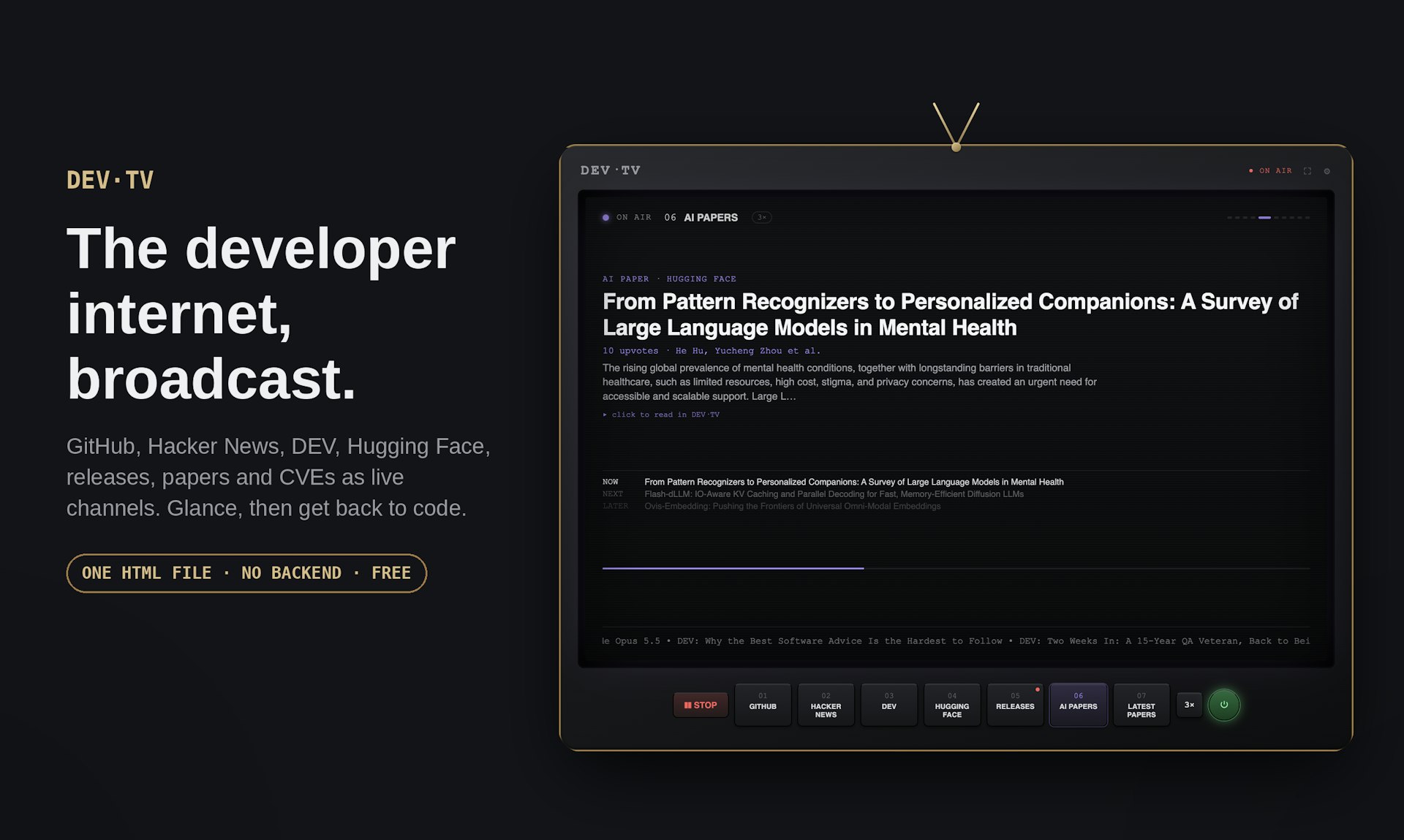
Most devs check GitHub, Hacker News, DEV, and Hugging Face out of habit. DEV·TV turns them into 10 live channels that play on their own, like TV. You can glance at the screen, catch one story, and get back to coding without getting sucked into a rabbit hole. Leave it on an office screen or a remote team's always-on tab, and it becomes shared context: everyone sees what's rising, and anyone can point and ask 'did you see this?' It's a single HTML file with no backend, no login, and no build step. Real source data, built-in reader, no AI summaries. It's free and MIT-licensed, so you can even tweak it to suit your team.
02

Switch brings AI agents into the collaboration tools your team already uses. Agents join as named participants in your Slack, Teams, Discord, or Telegram channels, sharing the same context and history as your team. Connect an agent once and use it across projects. Each room carries its own context, participants, and rules. Works with Claude Code, OpenAI, Google ADK, LangChain, and more. Open source, self-hostable, running in minutes.
03

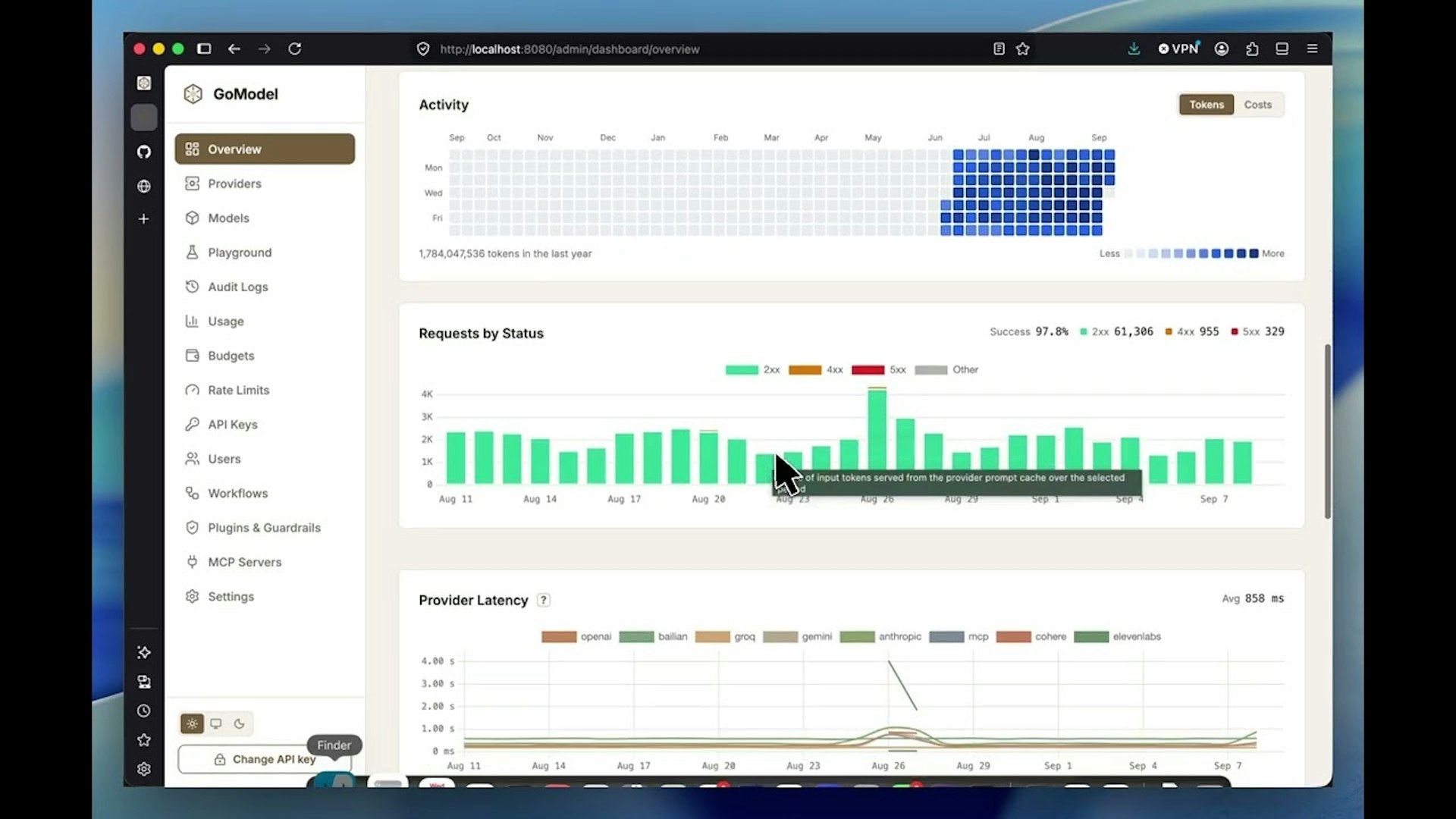
GoModel is an open-source AI gateway written in Go. It gives you one OpenAI-compatible API that works with any provider, while also handling budgets, caching, guardrails, load balancing, and failover. You can run it as a single binary or as a Docker image around 20MB in size. The MIT license and bring-your-own-keys approach make it flexible, and it is a strong self-hosted alternative to OpenRouter and LiteLLM.
04

Traccia is a vendor-neutral AI Agent Control Plane built for teams running autonomous agents in production. Observe agent behavior, evaluate performance, govern actions with policies and runtime controls, and maintain an auditable trail of what happened. It comes with an open, developer-first SDK and OpenTelemetry support, so Traccia works across models, frameworks, and existing observability stacks. That means you can control your agents without being locked into a single AI vendor.
05
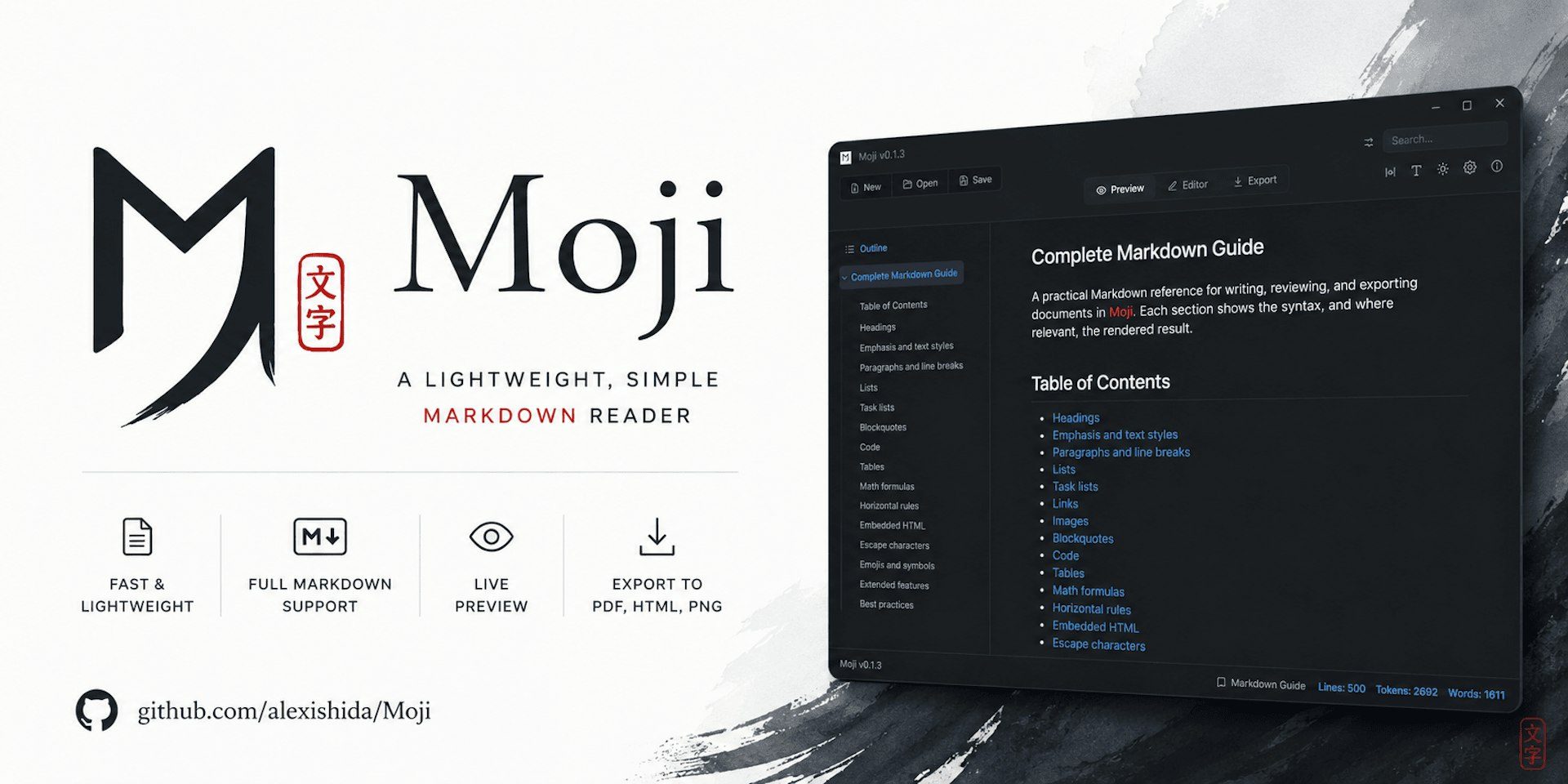
Moji opens Markdown like a document, giving you a fast, clean, and distraction-free reading and editing experience. It's a lightweight reader and editor for Windows, macOS, and Linux, with live preview, Mermaid diagrams, and export to PDF, HTML, and PNG. Whether you're jotting notes or preparing a polished document, Moji keeps Markdown simple.
06

Most meeting notes apps demand your recording, your account, and your credit card. Ulpaso doesn't. Just press record, and it captures both your microphone and system audio, transcribes them right on your Mac, and saves everything as an editable Markdown file. No cloud upload, no login required, and no monthly subscription for a basic checklist. It's just you, your Mac, and your notes.
07

Oats is an AI meeting note-taking tool that is completely open, local, and free. It is designed to stay out of your way during meetings: no bots to invite, no subscription required when you run it locally with an on-device LLM. Oats works on both macOS and Windows. If you want more, you can connect to the ariso.ai cloud backend for enhanced transcription, multi-language support, speaker recognition, assessment, coaching, auto-tracking follow-ups, and other advanced features. But the core experience is private, local, and always free.
08

Most CRMs bolt AI on. Relaticle is built agent-first: any MCP client gets 37 first-party tools over OAuth, with workspace custom fields in each agent's schema automatically. The in-app assistant is stricter: every write is a proposal showing the exact change, approved record by record. Self-host everything under AGPL, including local inference with Ollama. Free forever self-hosted; Cloud is flat per-workspace pricing, not per-seat.
09

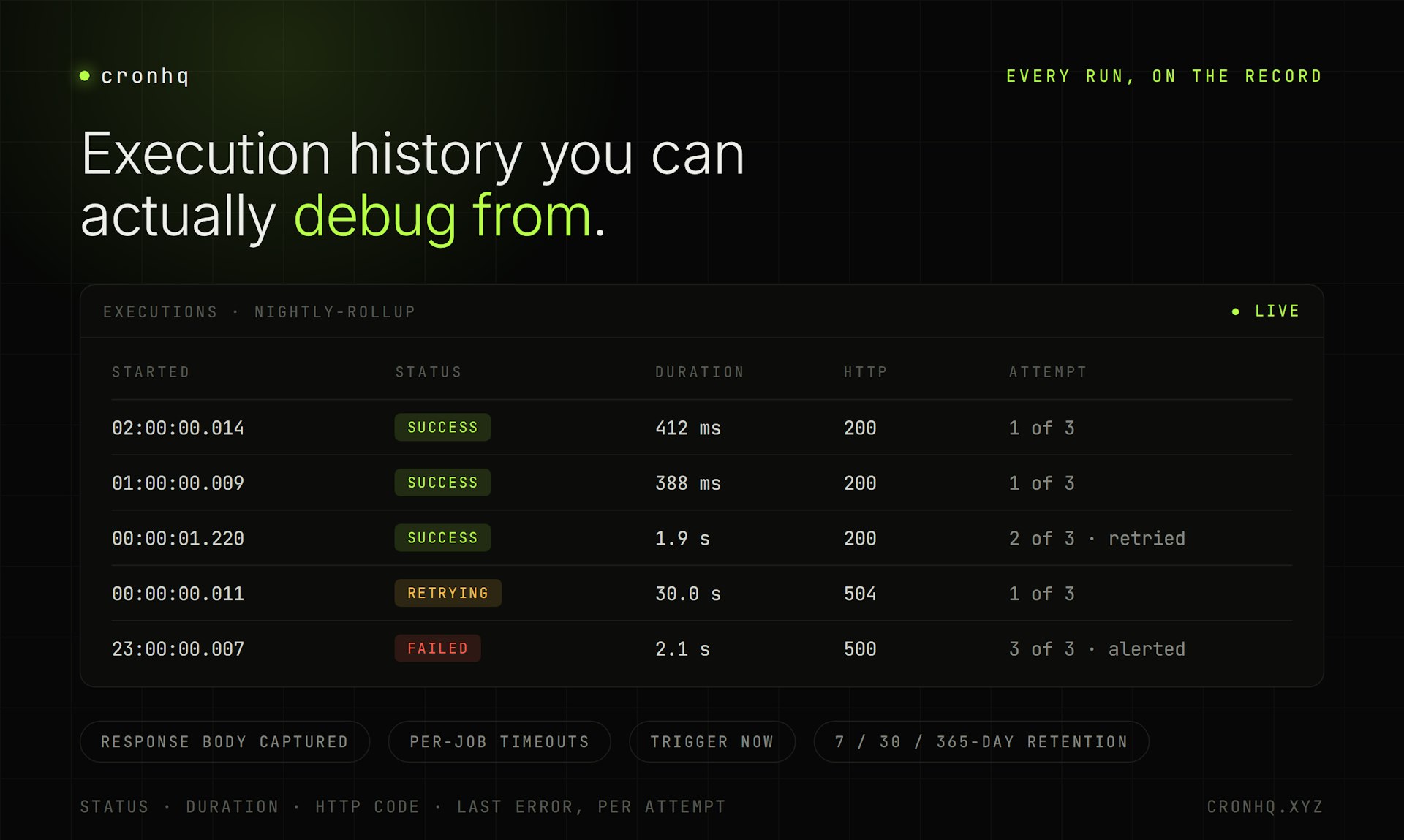
Cron jobs are notorious for failing silently. You have two servers running the same crontab, and suddenly your billing job fires twice, or a job dies and nobody notices for weeks. Cronhq is a scheduler built around one ironclad guarantee: exactly-once execution. It uses Postgres locks to enforce this, not best-effort, so you never have to worry about duplicate runs or missed triggers. On top of that, Cronhq provides retries with exponential backoff, HMAC-signed webhooks for secure callbacks, and heartbeat monitors for jobs that aren't run by Cronhq itself. You'll get alerts exactly once when a job fails, and once when it recovers, so you're never left in the dark. The whole system is written in Rust on Postgres, MIT-licensed, and self-hostable with the same image we run in production. There's a free tier that includes up to 5 jobs, so you can start using it immediately. Say goodbye to silent failures and hello to reliable scheduling.
10

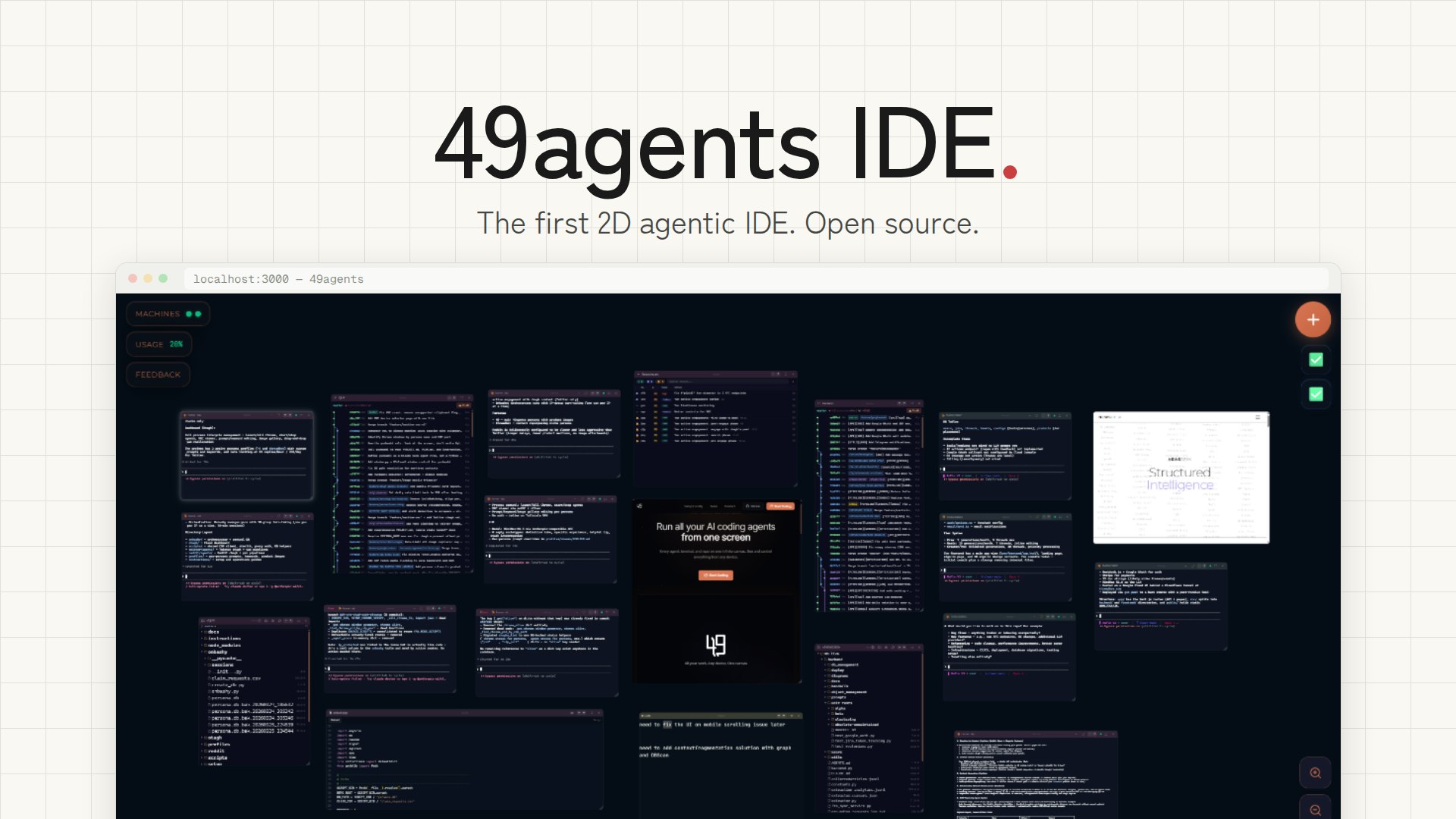
49Agents IDE gives you a 2D canvas where every agent, terminal, repo, and machine you own lives on a single map that you build yourself. Instead of keeping track of a maze of tabs, you arrange your work like city itself. That makes it easier to remember where things live, even weeks or days later. It is a practical way to reduce the mental weight of constantly switching between tabs and staying focused on what matters.