
Best Open Source products of the week October 26, 2026
Explore the most innovative and popular open source products that captured the community's attention during week. These rankings help builders compare standout launches, understand what each product does, and discover practical tools shaping the future of technology.
Period
Weekly ranking
Published for
October 26, 2026
Selection
6 ranked products
Ranked list
Community-backed open source picks
Each product profile includes the launch story, visual preview, and direct product link so readers can move from discovery to evaluation quickly.
01


The Brains turns founders, CEOs and investors into searchable MCP servers built from their public talks, essays, interviews and posts. Ask how Pieter Levels prices, what Paul Graham says about fundraising, or how Ryan Hoover launched Product Hunt, right inside Claude, Cursor, ChatGPT or Codex. Every answer quotes the source with a link. 37 brains today, one URL per brain or one for all. Free, open source (MIT), unofficial and not affiliated with the people.
02

AgentValley sits in your MacBook's notch. Every Claude Code session gets a card, every sub-agent gets a row, and each one comes with a little pixel programmer. You can see what is running, which model it is using, and what is waiting on your input. It is a simple way to keep tabs on a busy coding session without switching windows, and it is free and open source.
03

Desigma is a free Figma alternative built with Rust, aimed at designers and developers who want a lightweight design tool. The project is open source, and you can contribute to its development by visiting deepfounder-ai/desigma on GitHub. Just create an account there and jump in. Whether you want to use it or help build it, Desigma is open for you.
04

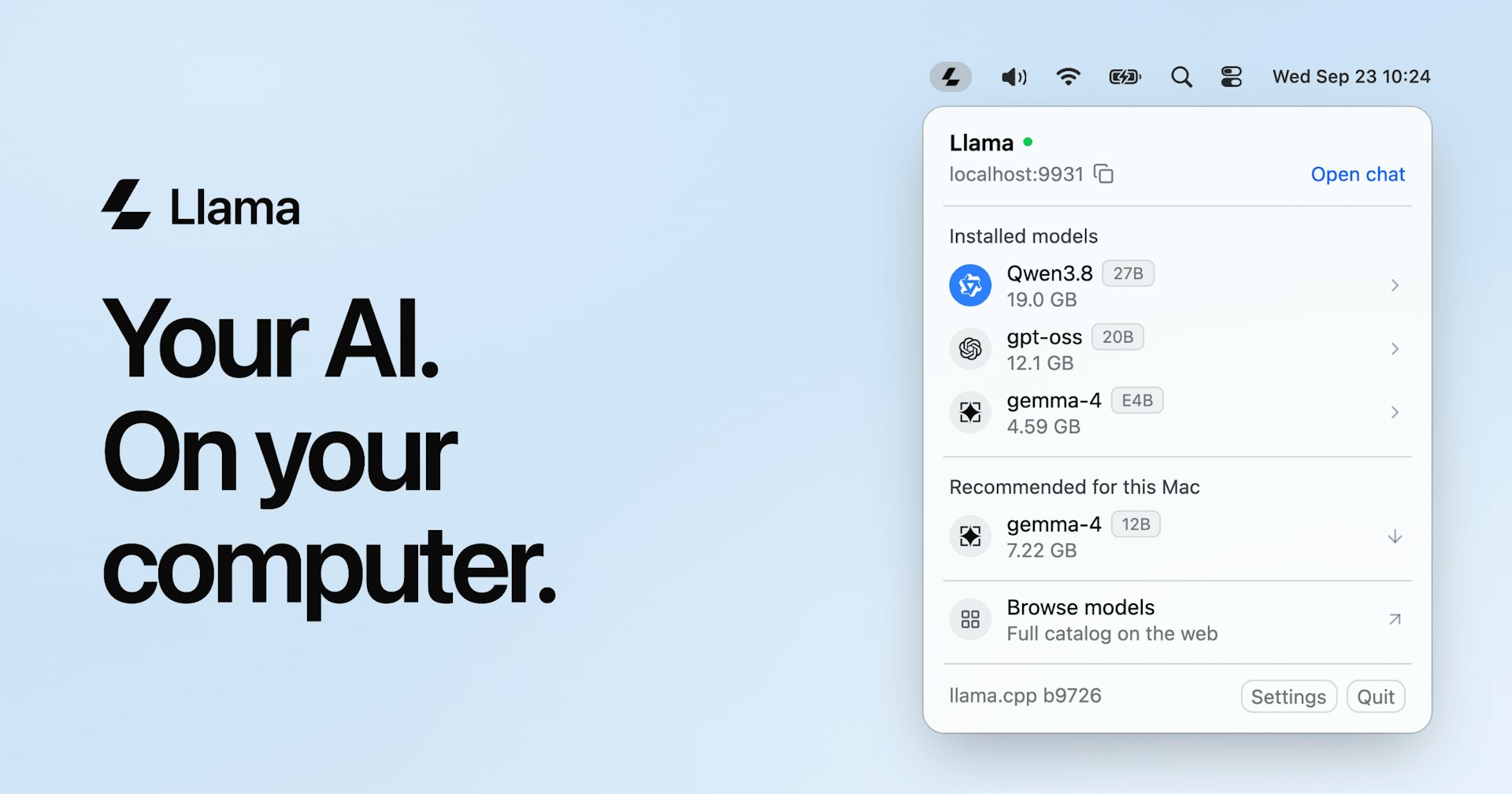
Llama Windows puts llama.cpp right in your Windows 11 system tray. You can download open models from Hugging Face with one click, start a chat with Alt+Space, and let coding agents, editors, and scripts all share the same local OpenAI-compatible API and model cache. It is free and open source, so you can run powerful language models locally without the usual setup headache.
05


Radar is an open-source Kubernetes UI and MCP server that gives you and your AI agents a clear view of your cluster. It surfaces topology, resources, events, Helm releases, GitOps state, live traffic, and security checks. When something looks wrong, click Investigate and your agent can trace the issue to its root cause. You can run Radar locally as a single binary or inside your cluster with RBAC and OIDC, and no account is required. If you need more, Radar Cloud adds fleets, alerts, and hosted investigations.
06
Most ADEs bring the browser into the IDE. tabsh takes the opposite approach: bring coding sessions to your browser, where your work already happens. It's a small Rust daemon that puts all your sessions across projects on one Kanban board/list, with status updates via agent hooks. Use real terminals or chat panels with Claude Code, Codex, Cursor CLI, OpenCode, and more. Free, MIT-licensed, macOS/Linux.